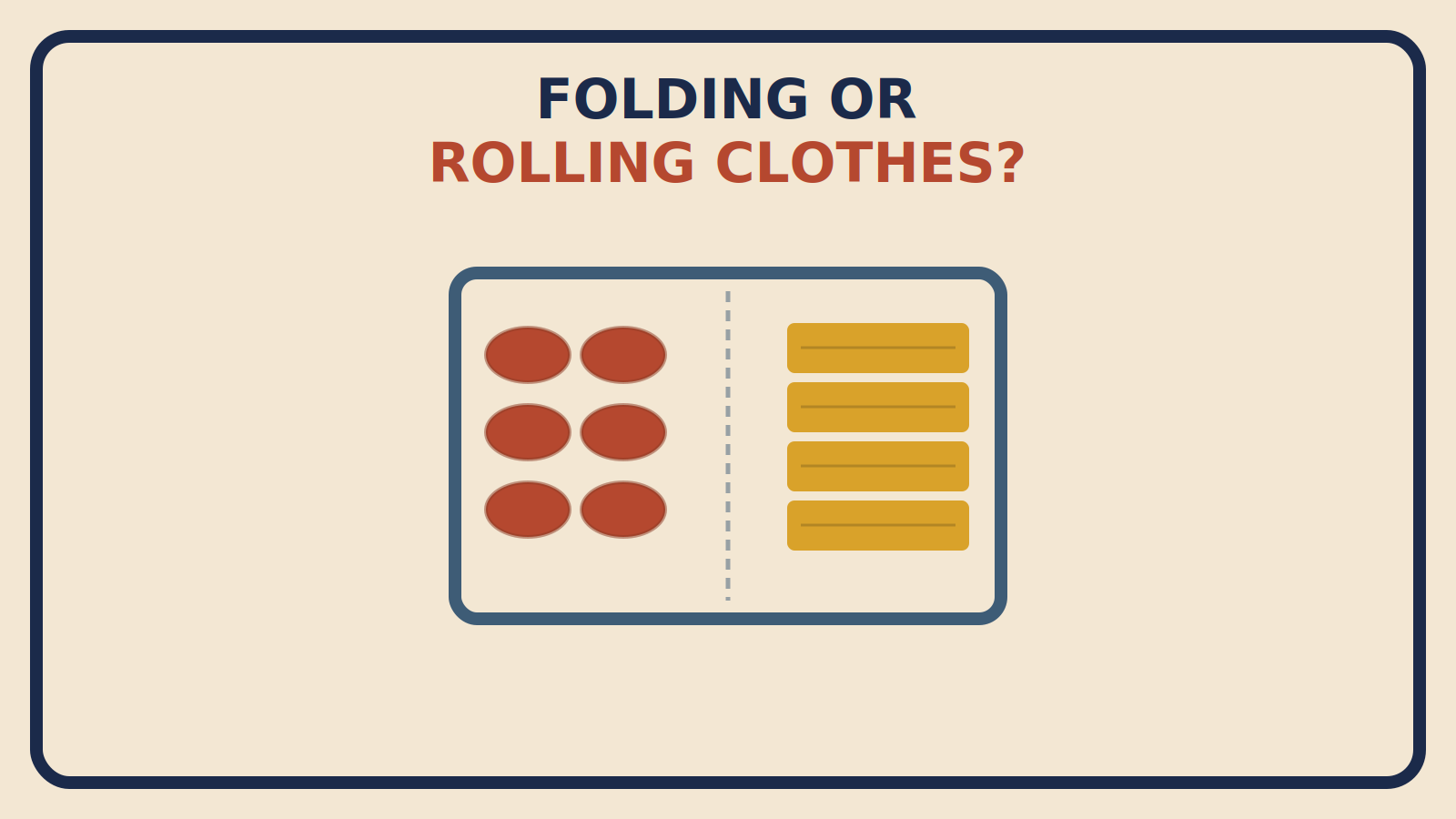
Rolling vs. Folding: Which Packing Method Actually Saves Space
July 22, 2026 · 4 min read
Lightweight, casual pieces like T-shirts and synthetics roll into tighter, more compact shapes, while structured pieces like button-downs and dresses stay sharper when folded, so the actual answer is both methods in the same bag, matched to the garment.
Quick Answer
- Roll lightweight, casual pieces, T-shirts, leggings, knits, synthetics, for compact shapes
- Fold structured pieces, button-downs, blouses, dresses, to keep a crisp line intact
- Rolled items create a wider, flatter footprint; folded items stack taller and narrower
- If there's an iron at your destination, roll more aggressively and fix creases on arrival
- Use a ranger roll only for lightweight items in a genuinely tight space, not the whole bag
Why This Is a False Binary
Both work but for different purposes, and the debate itself is a bit of a false binary, the most experienced packers don't pick one method and apply it to everything in the bag. They match the method to the garment.
Rolling genuinely does save space for the right items. Lightweight, casual pieces, T-shirts, leggings, knits, synthetics, roll into tight, compact shapes that pack down smaller than the same items folded, and rolled clothes are easier to see and access all at once, since nothing's stacked directly on top of hiding what's underneath. The trade-off shows up in shape rather than volume: rolled items create a wider, flatter footprint in the bag, while folded items stack taller and narrower, so the actual space savings depend partly on your suitcase's proportions, not just the technique.
Folding is the better call for structured pieces, button-down shirts, blouses, dresses, anything with a crisp line you want to survive the trip looking pressed rather than crumpled. One packing-cube expert's rule of thumb: roll casual, fold formal. Structured clothes tend to look sharper overall when folded rather than rolled, while lightweight knits and synthetics resist wrinkling well enough that rolling them costs nothing on the wrinkle front and saves real space.
Common Mistakes
People assume rolling is always the more space-efficient choice regardless of garment. In practice, rolled items create a wider, flatter footprint while folded items stack taller and narrower, so the actual space savings depend partly on suitcase proportions, not the technique alone.
People assume the ranger roll is worth using for the whole suitcase. In practice, it's a good tool for lightweight items in a genuinely tight space, like a daypack or the last corner of a backpack, not a default method, since the cuff fold at the hem can actually wrinkle fabric more than a simple roll would.
People assume iron access at the destination doesn't affect the packing method. In practice, it changes the calculus directly, if there's an iron or a steamer available, rolling more aggressively, including bulkier pieces that would otherwise wrinkle, becomes a reasonable trade since any creasing gets fixed on arrival.
People assume packing method doesn't matter if laundry is available on the trip. In practice, it matters in a less obvious way, if you're rewearing the same core pieces multiple times, the method that keeps those repeat-wear pieces looking freshest, usually folding for anything structured, earns its keep more than pure space-saving would suggest.
The Ranger Roll and Other Techniques
The core distinction between rolling and folding, the "roll casual, fold formal" guidance, the footprint comparison, and the ranger roll technique are drawn from the New York Times Wirecutter's rolling-vs-folding guide.
Don't commit to one method as an identity. The instinct to be "a roller" or "a folder" misses the actual point, the best-packed bags mix both, sometimes even within a single packing cube, matched to what each specific garment needs rather than a blanket rule applied to everything.
If you're building toward a longer trip where this kind of packing efficiency compounds over more days, our 10-day outfit guide covers the wardrobe side of the same problem.
Whatever mix of casual and structured pieces your trip needs, JetKit builds the packing list around your closet and your trip so the rolling-versus-folding decision above is already sorted before you start folding.
Frequently Asked Questions
Does rolling or folding clothes save more space?
It depends on the garment. Lightweight, casual pieces like T-shirts, leggings, and synthetics roll into tight, compact shapes that pack down smaller than folded, while structured pieces like button-downs and dresses tend to look sharper and stay less wrinkled when folded rather than rolled.
What is the roll casual, fold formal rule?
It's a packing-cube expert's rule of thumb: roll casual pieces since lightweight knits and synthetics resist wrinkling well enough that rolling costs nothing on the wrinkle front, and fold formal or structured pieces since they tend to look sharper overall when folded rather than rolled.
What is a ranger roll?
A technique borrowed from military packing that folds a garment into thirds, rotates it, rolls it tight, and tucks the roll into a cuff at the hem. It's genuinely more compact than a standard roll, but slower to do, and the cuff fold can actually wrinkle fabric more than a simple roll would.
Does having an iron at my destination change how I should pack?
Yes. If there's an iron or a steamer at the destination, rolling more aggressively, including bulkier pieces that would otherwise wrinkle, becomes a reasonable trade, since any creasing gets fixed on arrival. Without one, folding structured pieces matters more.
Should I pick one packing method for my whole suitcase?
No. The best-packed bags mix both, sometimes even within a single packing cube, matched to what each specific garment needs rather than a blanket rule applied to everything in the bag.
JetKit is an AI app that builds your packing list automatically based on your closet and your trip.